
[park]ing - courtrai


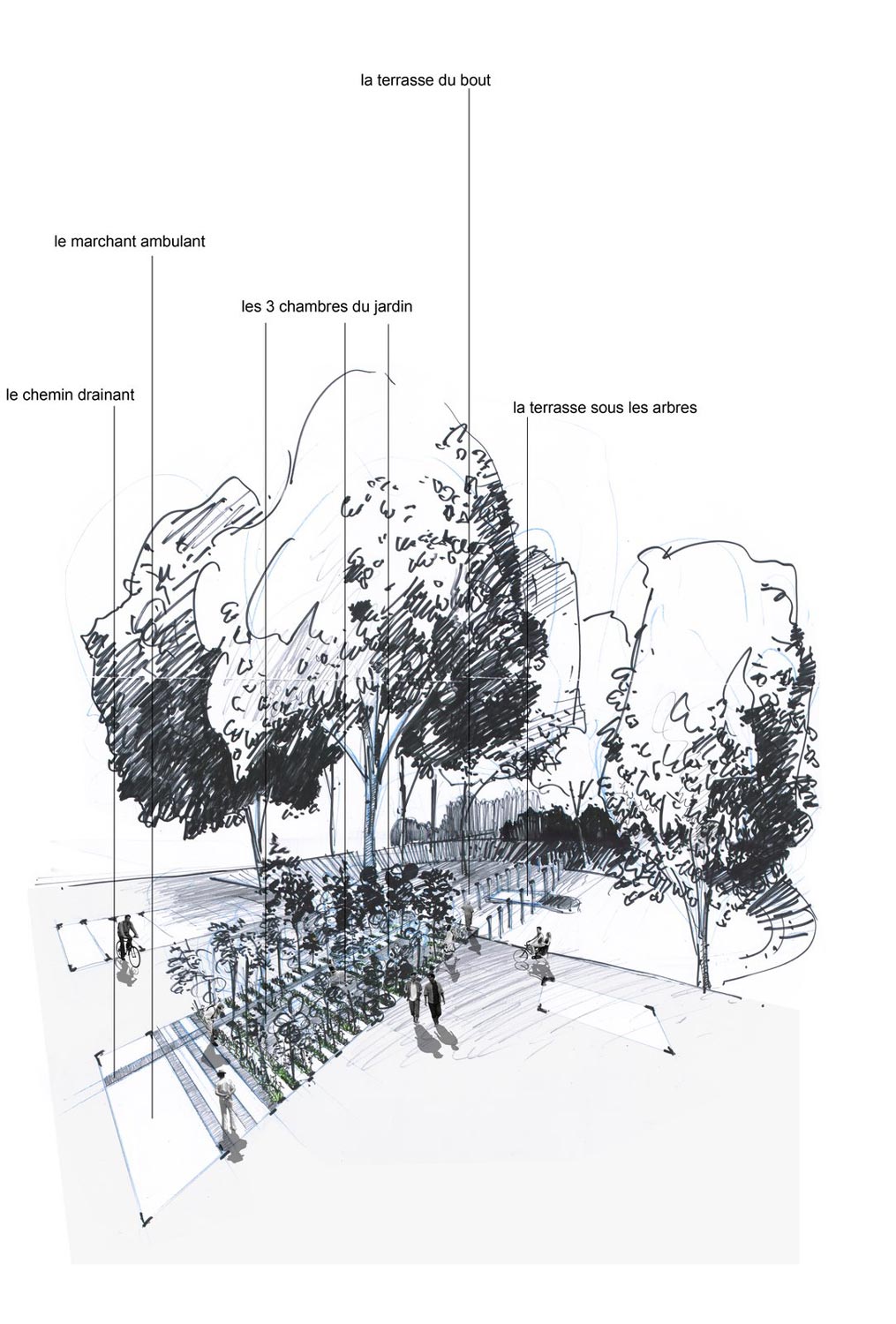





In the city centre of Kortrijk, a sunken, tree-covered parcel at the edge of a car park was entrusted to Wagon Landscaping as part of the Secret Garden festival. This fragment of landscape corresponds to the remnants of the city’s former moats, gradually backfilled over the course of urban transformations. The depression already forms a garden in itself. The project deliberately challenges the initial perimeter of intervention, shifting the focus to the car park built on the filled ground.
The proposal consists in recycling part of the car park into a garden, sketching a new future for these former moats. The principle is based on the hybridisation of uses, by transforming a limited number of parking spaces into planted areas. The garden design follows the rhythm and grid of the existing car park; the parking space itself becomes the module of the project.
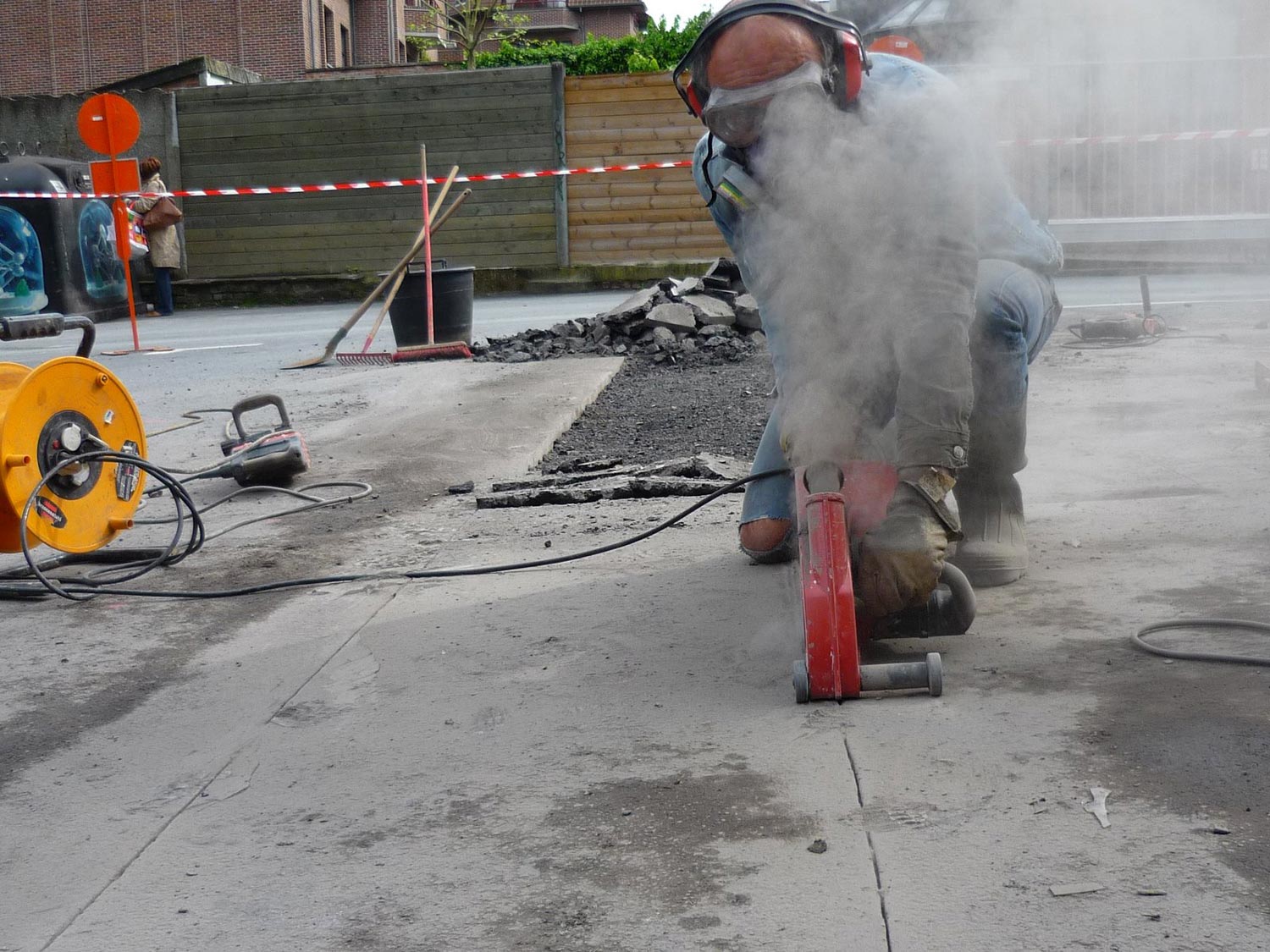
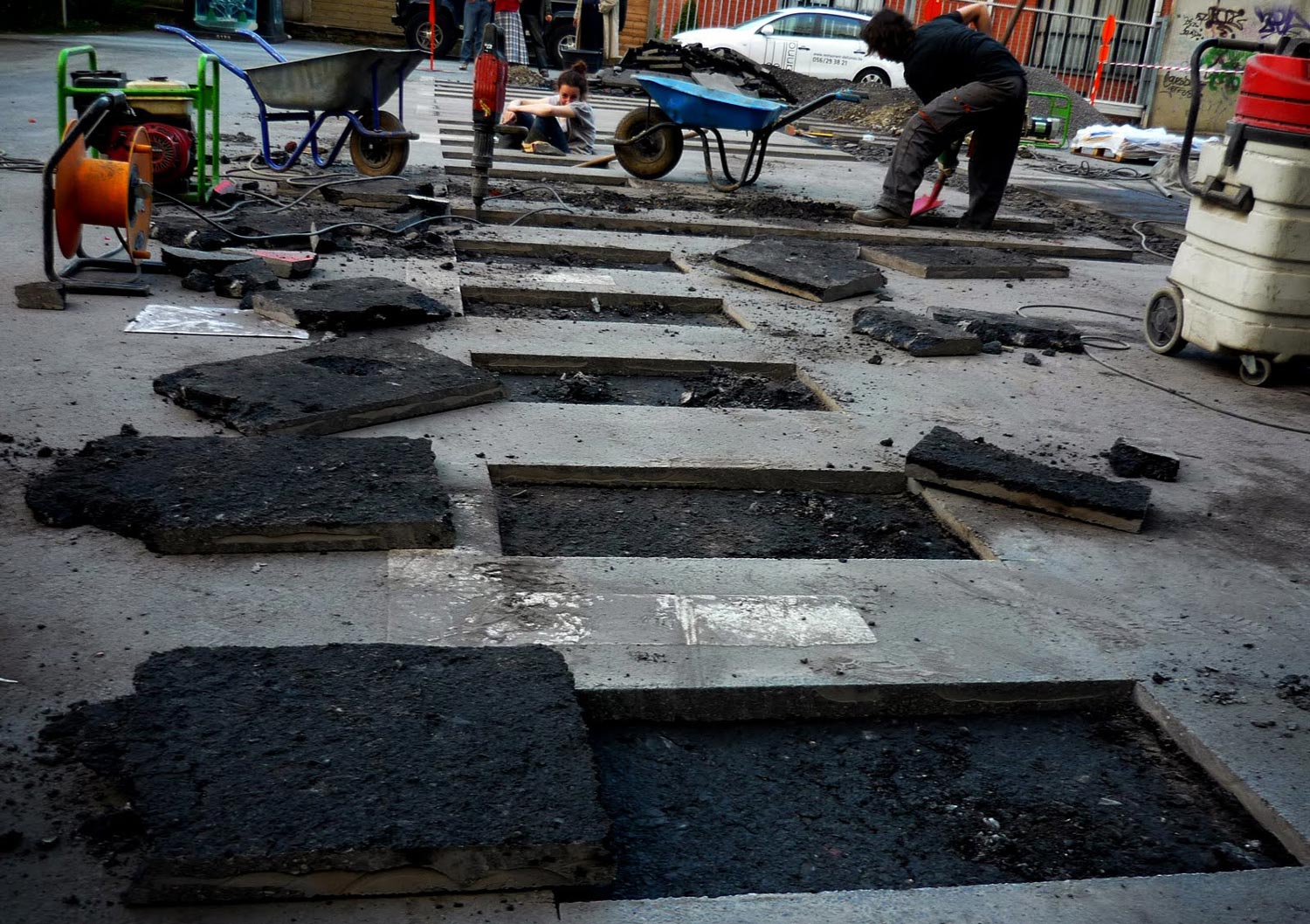
The shapes are drawn at full scale directly onto the asphalt and then cut with a diamond saw. This first experiment in a “parking garden” tests the feasibility of reusing asphalt surfaces and their underlying layers. The materials are dismantled, sorted and recomposed with amendments to recreate a fertile substrate.
By the following spring, the return of vegetation radically transforms the atmosphere of the site, now hybrid between parking and garden. While the intervention was a success for the festival, it also sparked intense debate. Even though only six parking spaces out of around thirty were converted, the project raised strong reactions, particularly from nearby shopkeepers, and more broadly questioned the place of the car in the city centre.
This foundational project opened the way for extensive research by Wagon into de-sealing urban surfaces and restoring soil fertility through recycling.