
que dalle!- île jeanty - dunkerque







Que Dalle! – Water Basin of Île Jeanty, Dunkerque
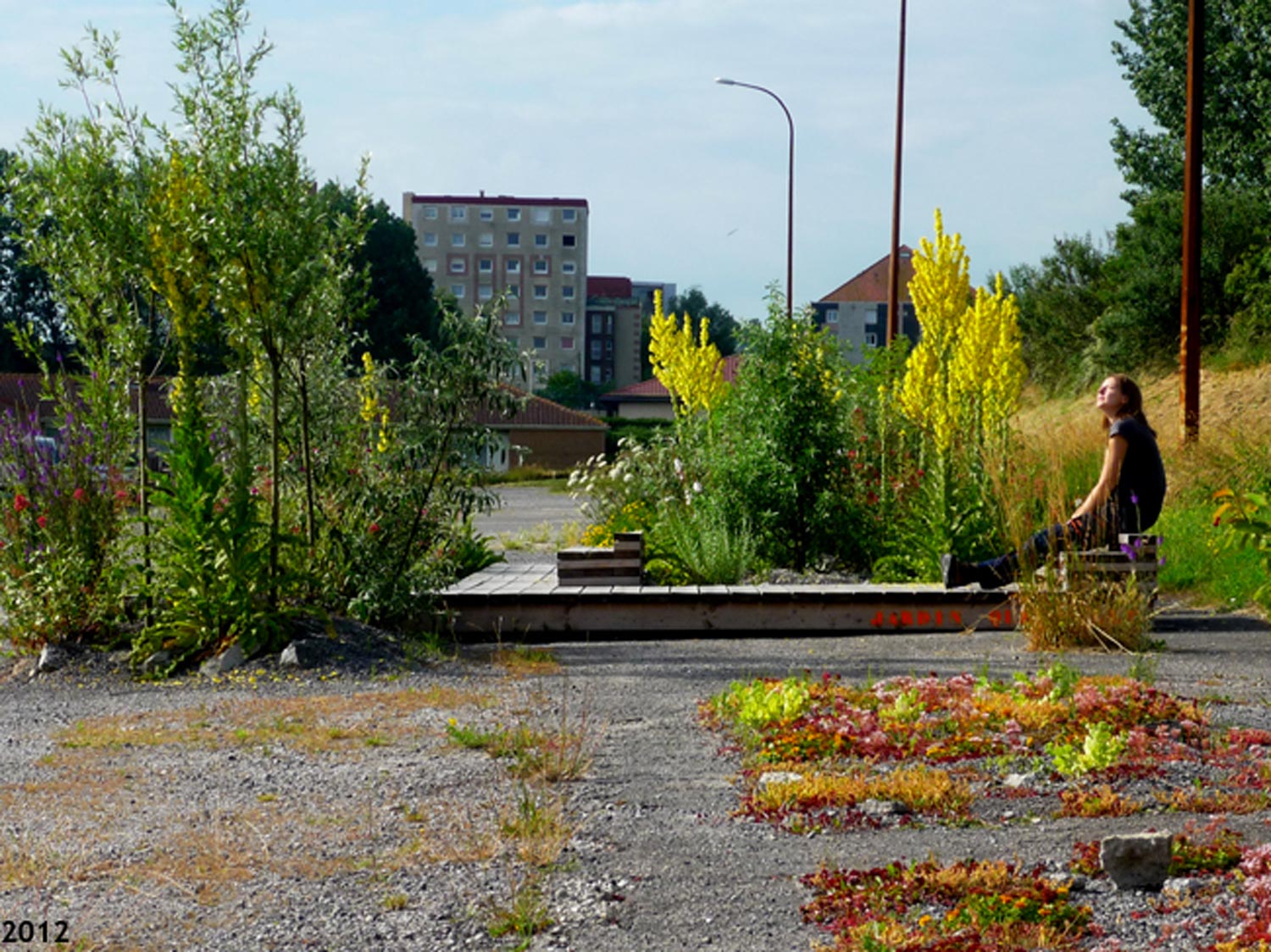
At the request of the City of Dunkerque, Wagon Landscaping, in collaboration with Atelier 710, intervened on the site of the water basin on Île Jeanty. Que Dalle! is conceived as an experimental garden, developed as part of the Jardins-Barges project, and explores the transformation of an former loading quay into a soil capable of supporting vegetation.
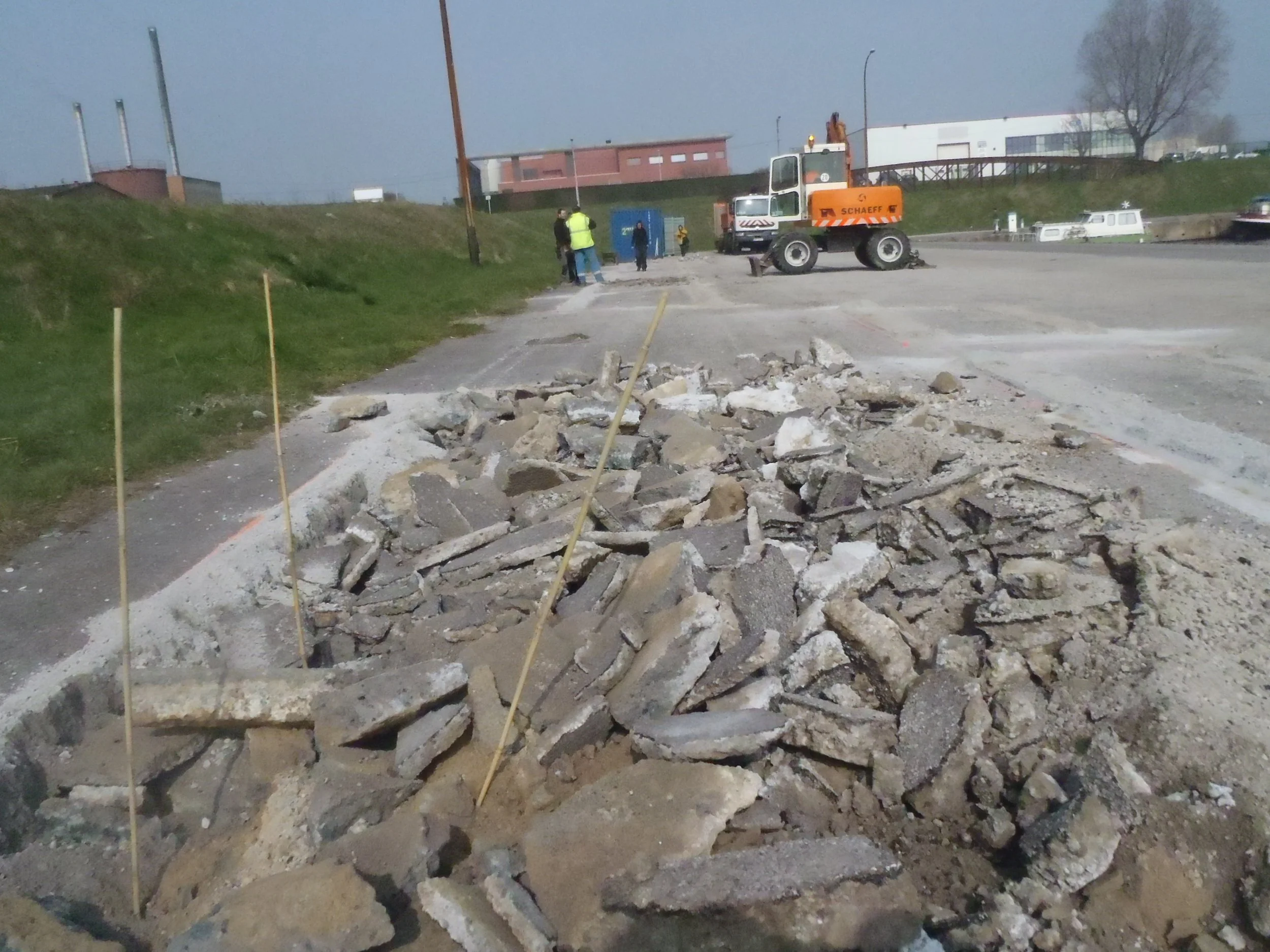
The site presents particularly constrained conditions. The quay is formed by a concrete slab approximately 30 cm thick, originally designed to support heavy trucks. Dunkerque is built on sandy ground, resulting in a subsoil that is both highly draining and acidic. The project investigates the capacity of plant life to establish itself on a fully artificial surface, without importing large quantities of external soil.
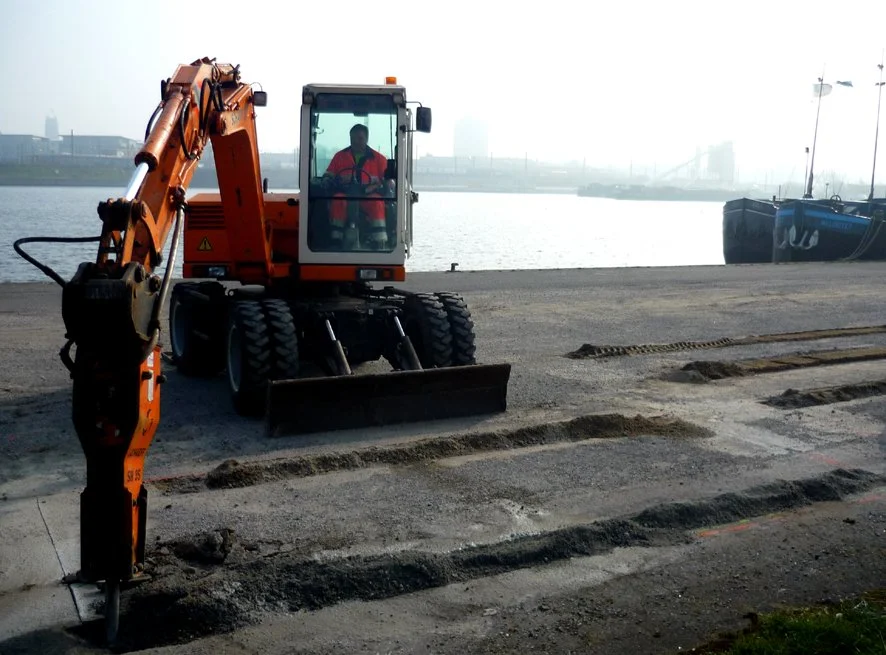
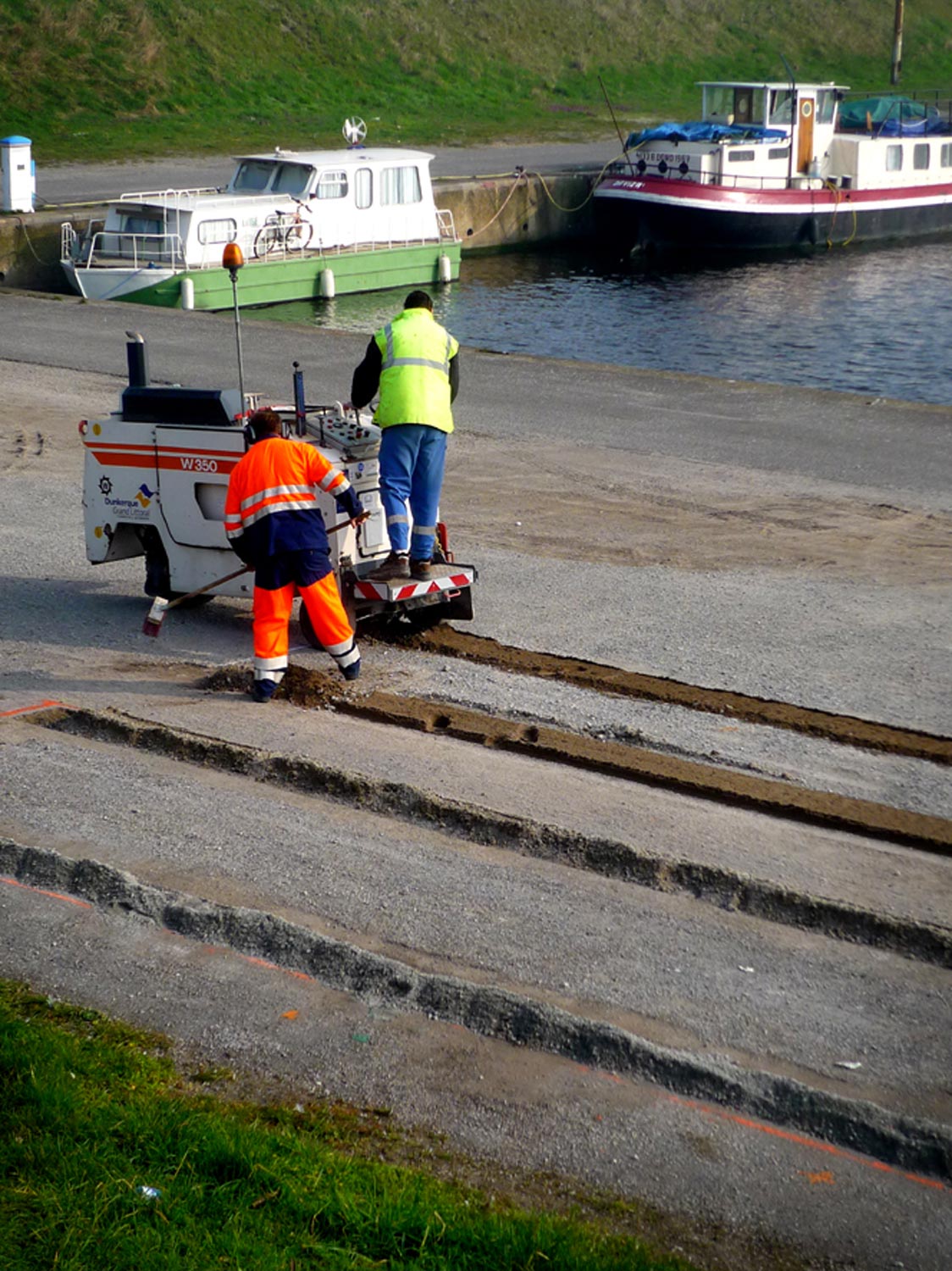
To enable rapid, large-scale implementation, the project relied on the road maintenance teams of the Dunkerque Urban Community and their heavy machinery: hydraulic breakers, milling machines and diamond saws. These tools shaped both the construction process and the garden’s design. The layout is structured into large planted bands, differentiated by varying degrees of soil treatment: simple slab fracturing, or fracturing combined with in-situ material mixing.
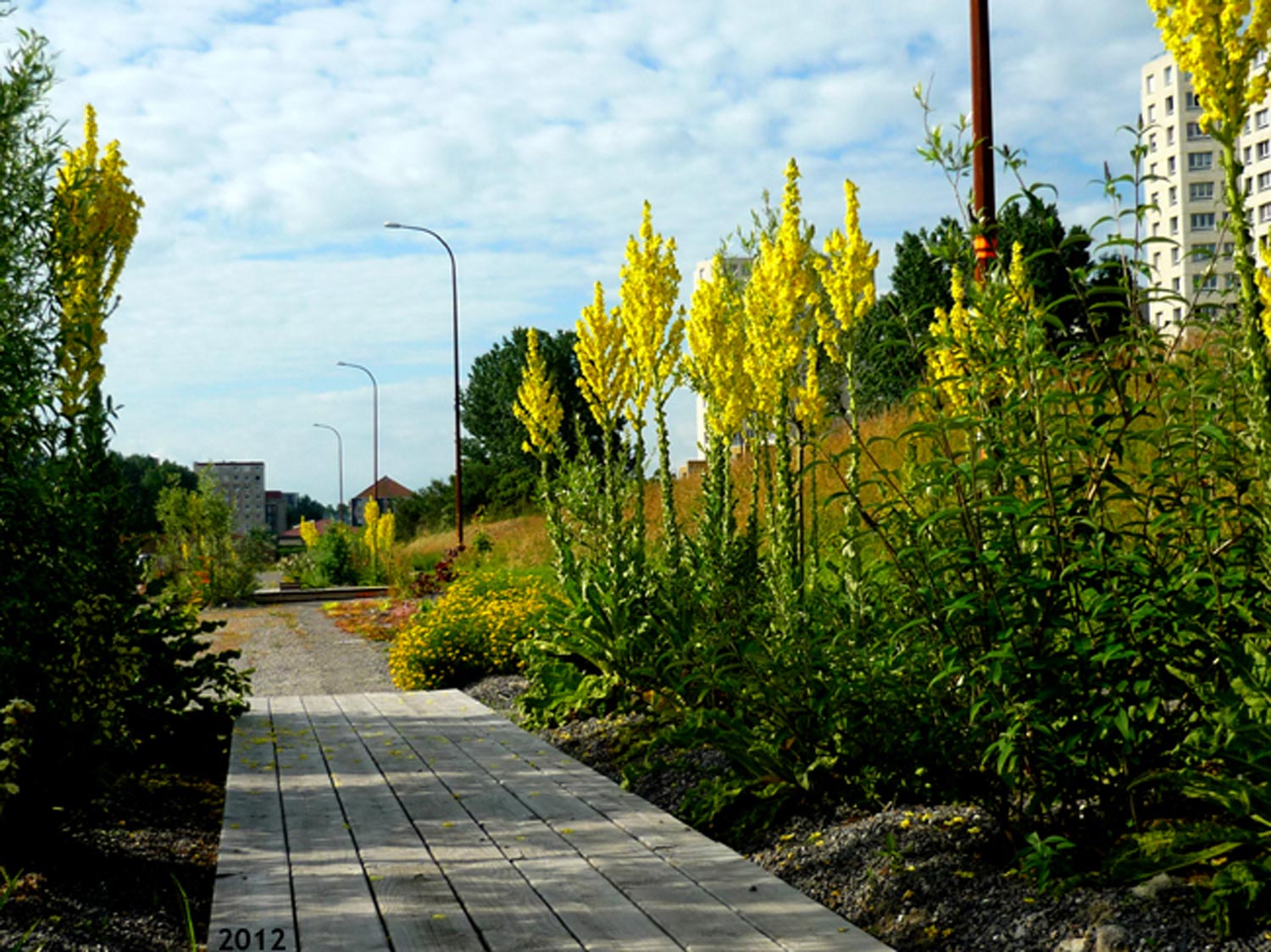
Wooden terraces are inserted within the planted bands, creating places to pause and offering views over the water basin of the barge port on Île Jeanty.
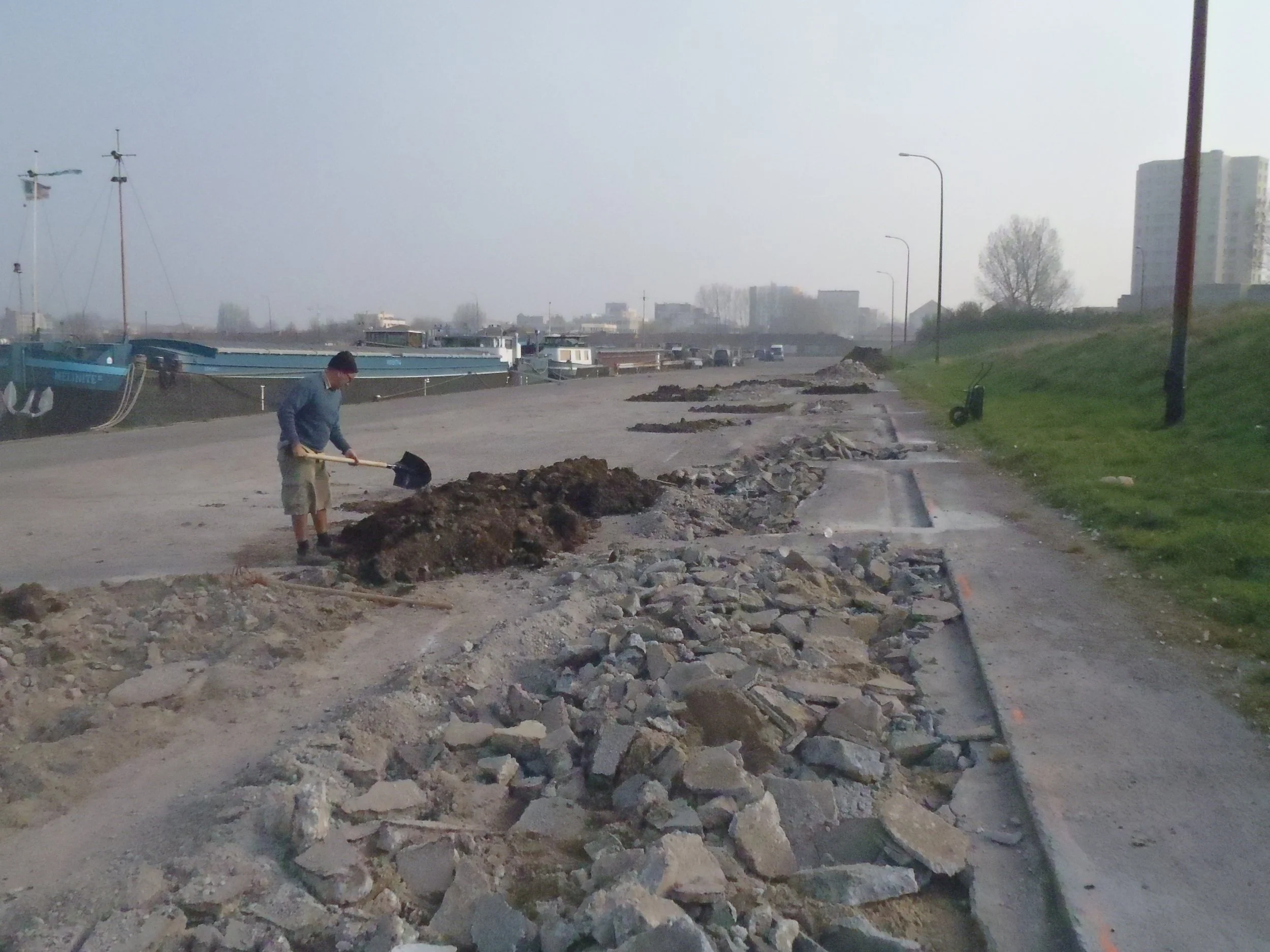
The process begins with cutting and decompacting the concrete slab. No waste is exported from the site: all materials are reused in place to minimise transport and avoid unnecessary landfill processing. Even the concrete blocks remain within the soil structure — trees are not afraid of stones. The substrate is then lightly amended and mixed with clay-rich soil to improve water retention in an otherwise highly draining context.
The planting palette is based on leguminous species capable of naturally enriching the soil, combined with pioneer shrubs adapted to poor and highly constrained conditions. These species form the initial strata of a regenerating environment, initiating long-term ecological dynamics. A mineral mulch made from reclaimed asphalt blocks and road gravel protects the soil, limits evaporation and contributes to the structuring of this “neo-soil.”
The garden is designed without any irrigation system. Plant species are selected for their ability to adapt to local climatic and hydrological conditions, following a principle of sobriety and resilience. Wagon Landscaping accompanied the garden for its first three years, a critical period for guiding plant dynamics, observing emerging balances and making targeted adjustments. After this phase, the garden was intentionally left to evolve freely, becoming an autonomous and living landscape.
This experimental project demonstrates that large-scale renaturation of highly anthropised sites is possible through economical means, on-site material reuse and by trusting the capacity of living systems to reclaim artificial soils. Here, landscape design becomes a process of accompaniment rather than a fixed form.